
Samsung Patent: Chunky Brick Phone That Unfolds Into a Tablet (2026)
Samsung may be exploring one of its most unusual mobile display concepts yet.
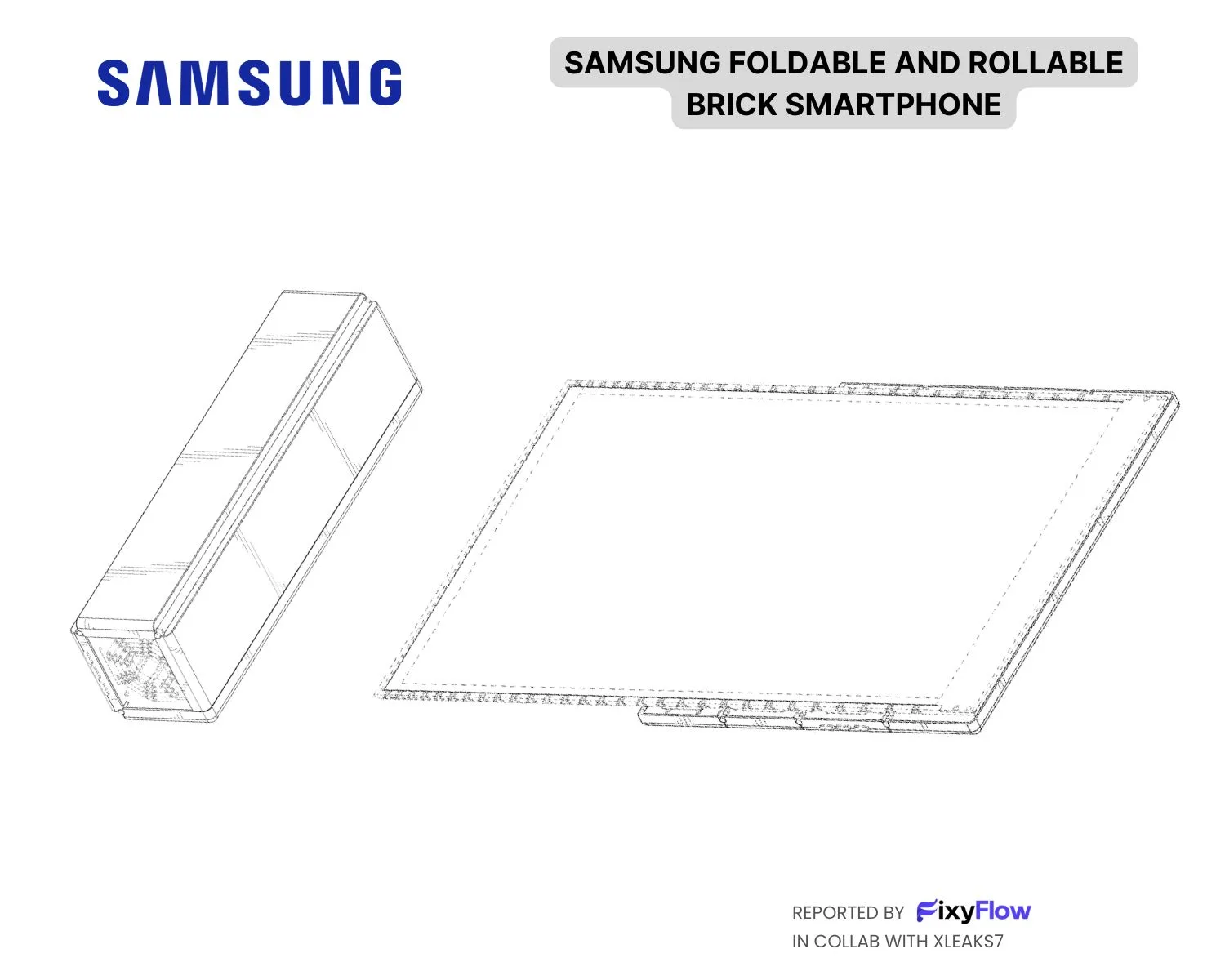
A newly published Samsung patent, spotted thanks to our collab with David from @xleaks7, shows a device that looks like a compact brick when folded, but can transform into a much larger tablet-style screen.
This is not a normal Galaxy Z Fold.
It is not just a rollable tablet either.
The concept appears to combine both ideas: a foldable body with an extra rollable display section that can extend when the device is opened.
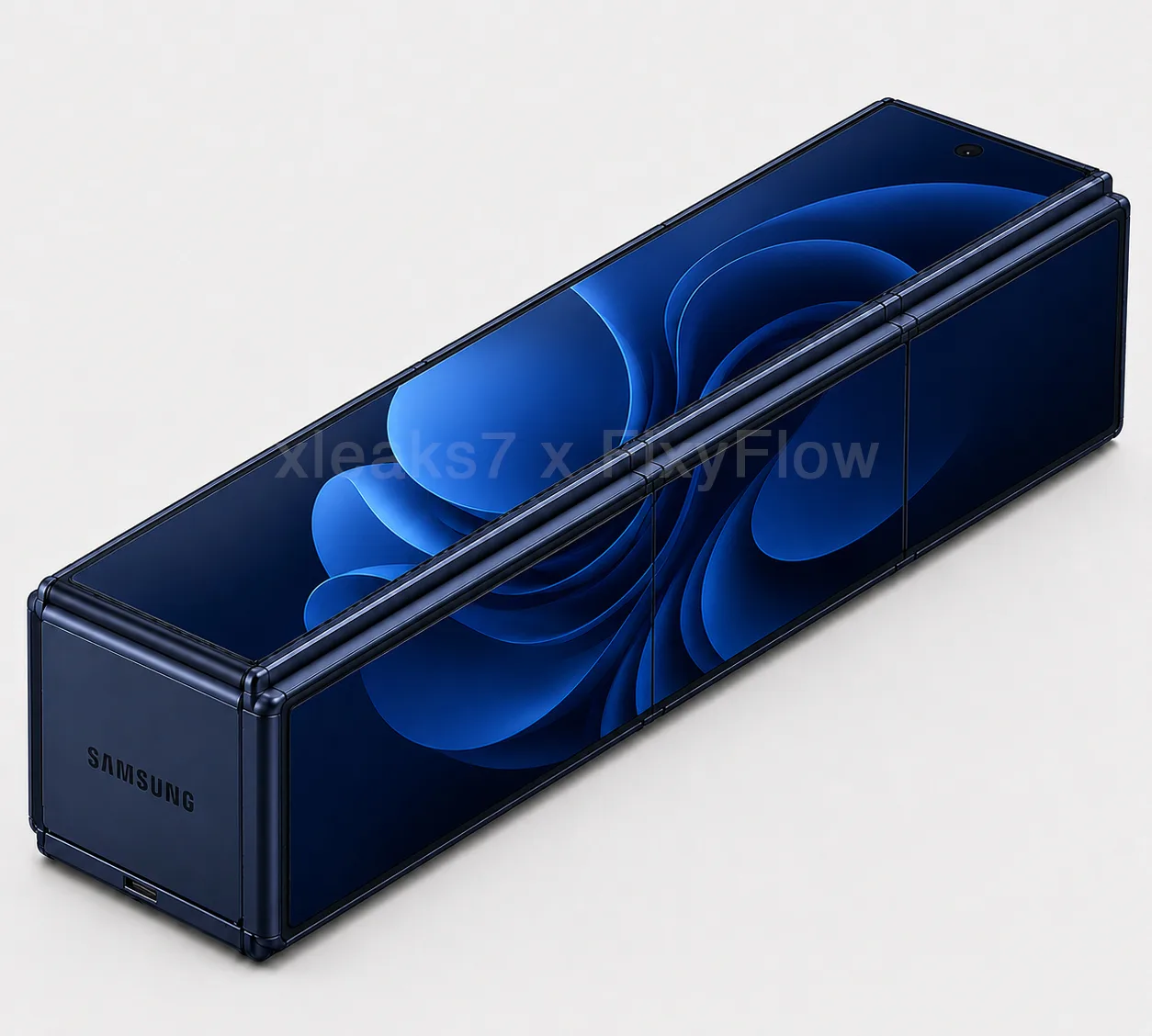
TL;DR: Samsung Patented a Folding Device That Transforms Into a Tablet
Samsung filed a patent for a chunky "brick" phone that opens out and rolls into a tablet-style screen. The body stays pocket-sized when closed, and the display expands when unfolded. It is part folding phone, part rollable, packed into a single thicker chassis. The patent does not confirm a product, but the concept signals where Samsung sees foldables going next.
Design Overview
When folded, the device looks like a long rectangular brick.
That brick shape is important because it seems to hide the main mechanism inside the body.
The screen sections, hinges, and rollable part are packed into a compact form, instead of staying exposed like on a normal tablet.
From the outside, the device looks thick and mechanical, with display panels wrapped around the body.
But when opened, the idea becomes much more interesting.
The foldable sections open first, turning the compact brick into a larger screen. Then the display appears to roll or slide out to the left, making the screen even bigger.
So the transformation could work in two steps: first foldable, then rollable.
That means the device could start as something pocketable, open into a tablet, and then extend even further when more screen space is needed.
In simple terms, Samsung is not just trying to make a bigger foldable.
It is trying to create a phone that stores a much larger display inside a compact brick-shaped body.
Packing that much mechanism into one body carries a cost the patent drawings never show. Every hinge, rollable track and folded display layer is one more thing that can fail, and none of them are a five-minute bench job. That is why phone repair shop software that texts customers status updates matters more on foldables than waiting for the pickup call: the honest answer is usually "still waiting on the part", and nobody wants to deliver that one three times by phone.
Best Use Case: Business Management
This type of device could make a lot of sense for business users.
When folded, it could still fit in a pocket or bag and work like a compact phone for calls, messages, approvals, and quick notifications.
But when unfolded and extended, it could become a proper workspace.
That extra screen space could be useful for checking invoices, reviewing reports, comparing documents, managing tasks, approving payments, or looking at dashboards without constantly zooming in.
For founders, accountants, managers, sales teams, and people running operations from their phone, this kind of design could make mobile work feel less limited.
That is already the reality for solo operators who handle mobile service business management from their phone, handling quotes, job updates, and invoices between stops without ever opening a laptop.
Screen size is rarely what stops them, though. What matters more is whether the software fits a phone in the first place. Mobile service business software that sends the customer an ETA has to work in a few taps between stops, on whatever hardware is already in the van.
If phones become portable workstations, then business tools need to work better on mobile too. A compact phone is good for quick actions, but a tablet-sized screen is much better for real work.
This Samsung concept tries to offer both in one device.
How Is This Different From the Galaxy Z TriFold?
If you search for a Samsung foldable rollable phone today, the top result is Samsung's own Galaxy Z TriFold page. That's a real phone. It isn't the device in this patent.
The TriFold folds twice, on two hinges, and nothing on it rolls. The patent folds (once, as far as the drawings show) and then rolls an extra panel out to the side. Same goal, different mechanism.
| Galaxy Z TriFold | Patent brick | |
|---|---|---|
| How it opens | Two hinges, folds inward | Folds open, then rolls out |
| Screens | 10-inch main, 6.5-inch cover (Samsung) | No sizes in the filing |
| Thickness | 12.9 mm folded, 3.9 mm at its thinnest unfolded (Samsung) | Thicker brick, no figure given |
| Battery | 5600 mAh (Samsung) | Not stated |
| Can you buy it? | Limited run, now sold out (Samsung's page, checked 2026-10-20) | No. It's a patent, not a product |
So the TriFold answers half the question. Samsung will ship a phone that opens to tablet size. The patent asks something else: can a rolling panel add screen without a third hinge?
I can't tell you which approach wins. Samsung hasn't said, and a patent filing isn't a roadmap (plenty of them never become a product).
Frequently Asked Questions
Is Samsung releasing a foldable rollable phone?
Not that Samsung has announced. The patent describes the idea. It doesn't confirm a name, a launch date or a price.
Is the Galaxy Z TriFold the rollable phone?
No. The TriFold uses two hinges and folds, and no part of it rolls. It was also a limited run, and Samsung's page now says it's sold out.
Why would Samsung make the phone a brick?
The thick body probably gives the rolled display somewhere to live when it's closed (that's my reading of the drawings, not a Samsung statement). A thin body would leave the rollable part exposed.
Would a phone like this be harder to repair?
Probably. More moving parts means more ways to fail, and a shop can wait days on one replacement panel. If you fix foldables, quote longer turnaround and tell the customer early.
Does FixyFlow need a big screen?
No. FixyFlow doesn't schedule jobs or do invoicing. It sends the customer a text and a tracking link at each stage, and that works on whatever phone is already in your pocket.
No futuristic hardware required.
FixyFlow lets service businesses track every job and keep customers updated straight from the phone in your pocket. Live job tracking, automatic status updates, and review requests. Free tier, no credit card.
Start a free trial of the field service software →The text and visuals of this article are the intellectual property of FixyFlow. If you want to share the content, please give a proper clickable credit back to this page. Reported by FixyFlow in collab with @xleaks7.