Curved-Edge Samsung Galaxy Z Flip That Folds in Both Directions
Samsung may be exploring a very different take on the Galaxy Z Flip.
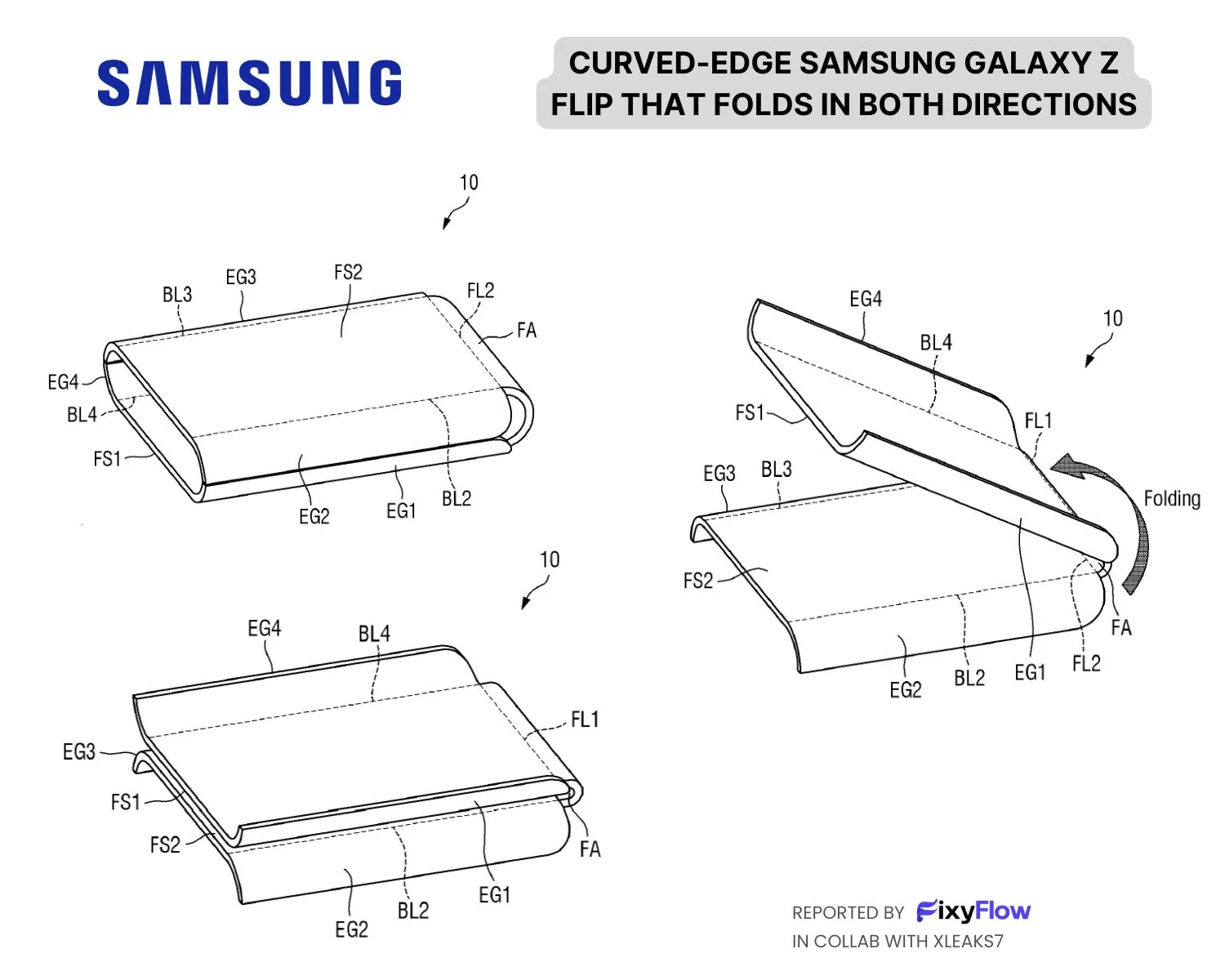
A recently uncovered Samsung patent, spotted thanks to our collab with David from @xleaks7, shows a foldable display that can bend inward and outward, with curved screen sections along the outer edges.
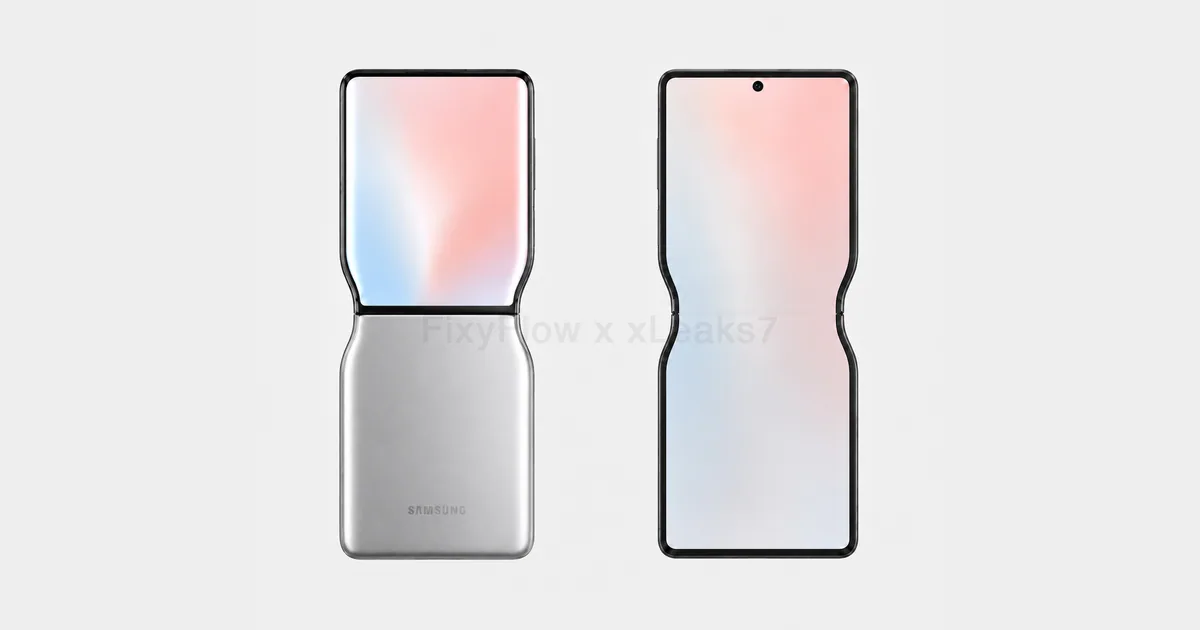
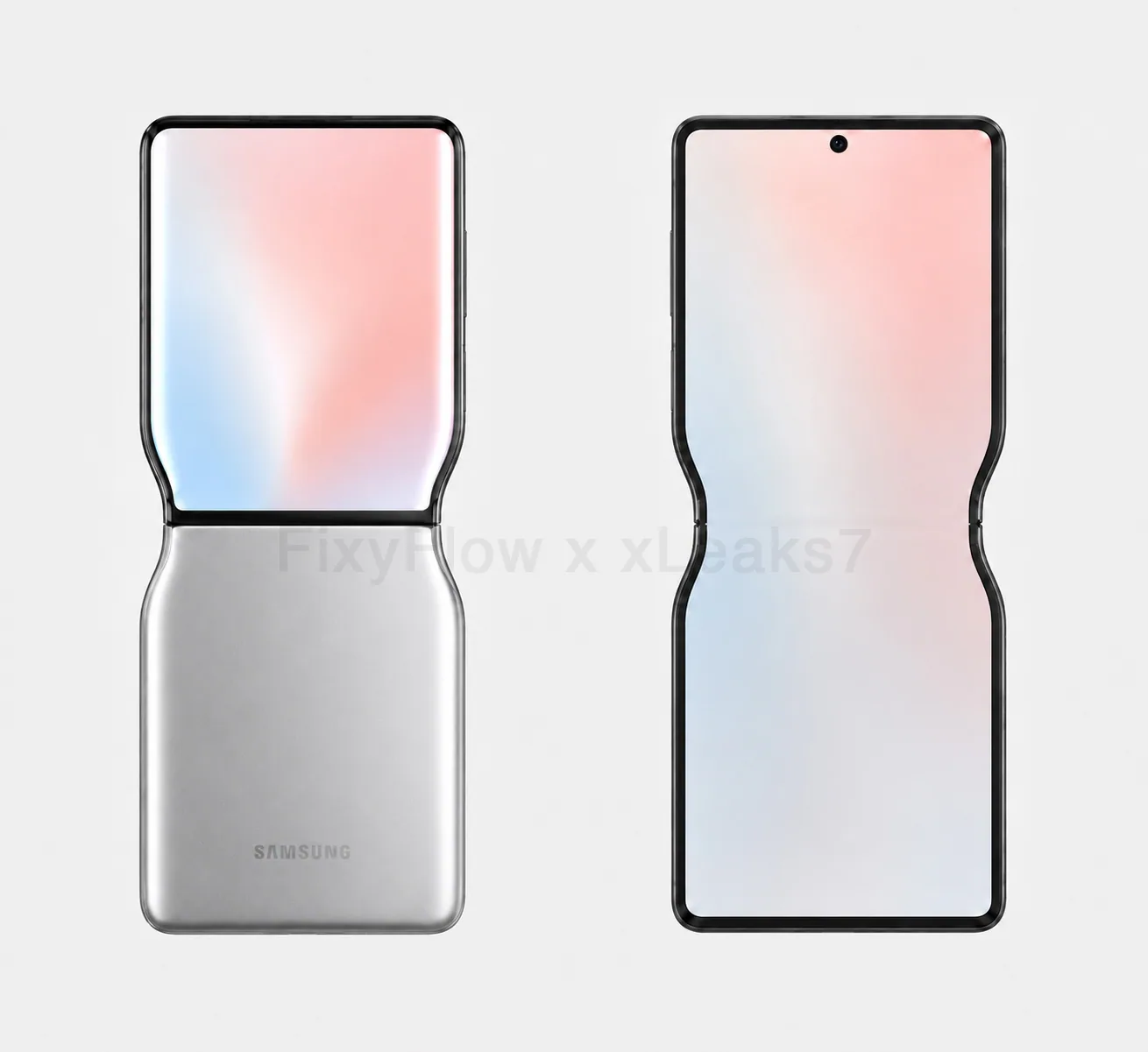
Our concept renders show how that idea could look in a real phone.
It follows another unusual concept we covered recently, a Samsung patent for a brick-shaped phone that unfolds into a tablet. Together they suggest Samsung is testing foldable ideas well beyond the current Z Flip and Z Fold lineup.
TL;DR: Samsung Patented a Galaxy Z Flip That Folds Both Ways
Samsung filed a patent for a Galaxy Z Flip style foldable with curved display sections along its outer edges and a hinge that could allow a full 360-degree fold, inward and outward. Small gaps near the hinge keep the curved parts from colliding, and rerouted display wiring works around those gaps. The patent does not confirm a product, but it shows Samsung working on the hardest part of the idea: making a screen survive a hinge and curved edges at the same time.
Design Overview
The device looks like a Galaxy Z Flip with a curved display built into the upper half of its outer side.
It has two main display sections, a central folding area and curved edge sections.
Small gaps near the hinge prevent those curved parts from colliding when the phone folds.
When folded inward, the main screen is hidden inside.
On the outside, only the upper half contains a curved display, while the lower half remains a solid housing panel.
That outer screen could be used for notifications, calls, music controls, timers, camera previews or quick widgets without opening the phone.
The hinge could allow the phone to fold through a full 360-degree range, moving from a normal inward-folded position to an outward-folded position with the main display facing outside.
When opened, the device provides a full-height inner display similar to a normal flip phone.
The curved outer screen would remain a separate secondary display rather than covering the entire exterior.
The Patent
The patent focuses on one big challenge: how to make a screen work around a hinge and curved edges at the same time.
Small gaps are needed near the hinge so the curved parts do not crash into each other when the phone folds.
But those gaps also break some of the tiny wires that carry the image signal through the display.
Samsung's idea is to guide new wires around the gaps, almost like building a detour around a blocked road.
These wires sit on different layers inside the screen, so they can cross other wires without touching them or causing a short circuit.
The patent also separates the main folding area from the curved side areas.
This could spread out the pressure when the phone bends and help reduce the chance of cracks forming near the hinge.
All of that engineering points at one thing: keeping a screen alive through thousands of folds. When a foldable does fail, the repair is rarely a quick screen swap, and the customer is usually waiting on a part rather than on bench time. Waiting is what produces the "is it ready yet?" call, which is why phone repair shop software that texts status updates beats asking people to check back in.
Is There a Samsung Phone That Flips Both Ways Today?
No. As far as I can tell (checked 2026-10-16), every Galaxy Z Flip Samsung has sold folds one way only: inward, with the main screen closed up inside like a clamshell. The phone that flips both ways is still a patent drawing, and a patent is a claim on an idea, not a launch date. Samsung files plenty of foldable patents that never ship. So I'd treat this one as a direction, not a product. If you saw a Samsung fold backwards in a video, it was most likely a render like ours.
What Folding Both Ways Would Change for Repair
Why does this matter to a repair shop? An inward fold protects the main screen when the phone is closed. Fold it outward and that screen becomes the outside of the phone, sharing a pocket with keys and coins. More exposure means more cracked inner screens, and on a foldable the inner screen is the expensive part.
The curved edges add a second problem. A curved panel is harder to pull off without cracking, and the detour wiring sits inside the display itself, so nobody fixes it on the bench. It's a whole-panel job. I haven't seen a teardown (there's no device to tear down yet), so treat this as an educated guess, not a repair guide.
Best Use Case: Business Management
A foldable like this could be especially useful for people who manage work from their phones.
When closed, the smaller outer display could show quick updates such as new orders, task alerts, payment notifications or approval requests without requiring the user to open the device.
When unfolded, the larger inner screen would be better suited for reviewing documents, checking reports, managing projects or working with business dashboards.
This is where foldable hardware and business management software could work well together.
For business owners and managers, the main benefit would be faster access to important information without giving up a larger screen for more detailed work.
FAQ
Has Samsung confirmed a curved-edge Galaxy Z Flip?
No. Samsung hasn't announced one. The patent shows the company is working on the idea, and that's all it shows.
Would the curved outer screen replace the cover screen?
In the patent drawings it plays the same role: a smaller display on the upper half of the outside for notifications and quick controls, with a solid panel on the lower half.
Why don't foldables fold outward already?
Because the screen is the weak point. An outward fold wraps the display around the outside of the hinge instead of tucking it in, and it leaves the main screen exposed when the phone is closed. The gaps and rerouted wiring in this patent are Samsung's attempt at the first problem.
Would a phone like this cost more to repair?
Probably, if it ships. Curved panels and a main screen that can sit on the outside both point toward more full-panel replacements. I can't give you a price (there's no part to price yet).
No futuristic hardware required.
FixyFlow lets service businesses track every job and keep customers updated straight from the phone in your pocket. Live job tracking, automatic status updates, and review requests. Free tier, no credit card.
Start a free trial of our field service software →The text and visuals of this article are the intellectual property of FixyFlow. If you want to share the content, please give a proper clickable credit back to this page. Reported by FixyFlow in collab with @xleaks7.